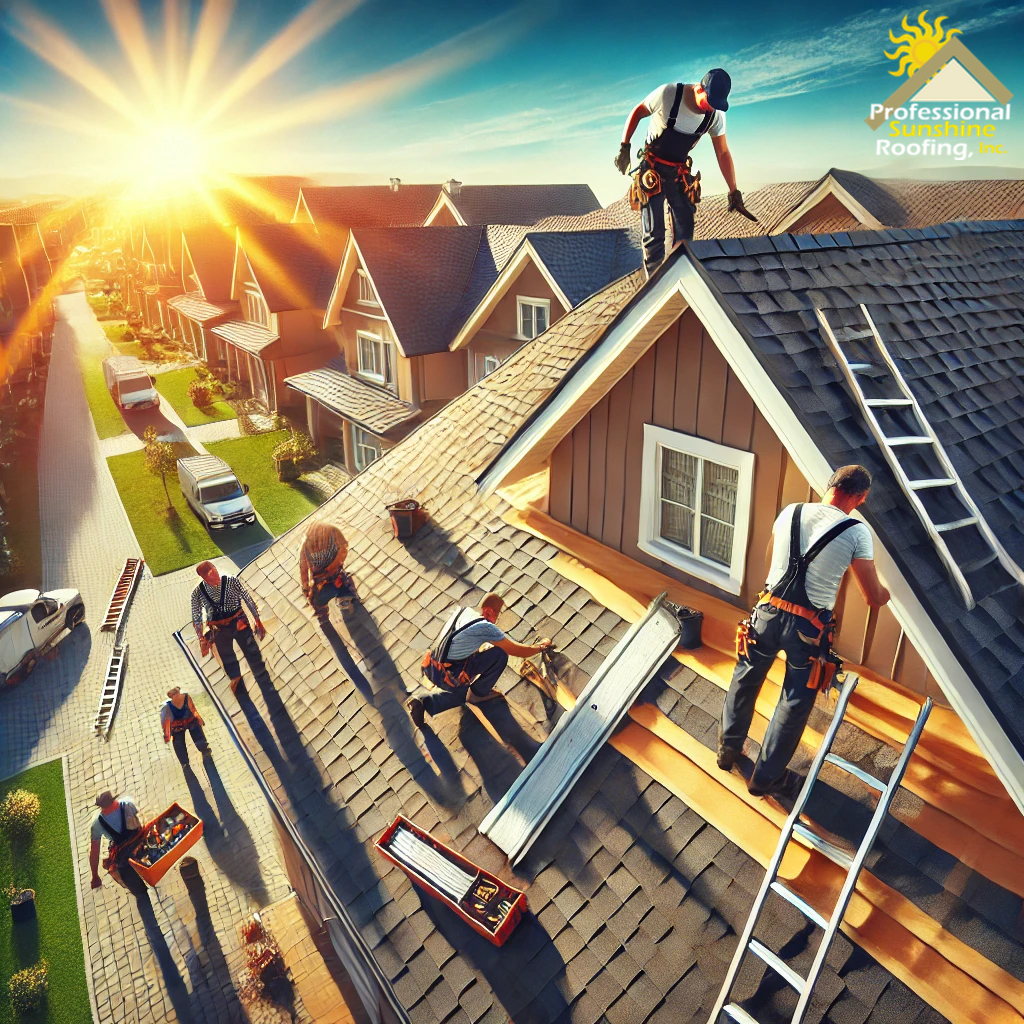
Professional Sunshine Roofing
Professional Sunshine Roofing is a certified roofing contractor headquartered at 922 Shadick Drive in Orange City, Volusia County, Florida. Founded...
Google 4.4 (37)
FL LicenseCCC1328011
Status DBPR active
1 licensed, DBPR-verified roofing company serving Glenwood. Every company here is checked against the Florida Department of Business and Professional Regulation. Compare them below and request free quotes, with no obligation.
Professional Sunshine Roofing is a certified roofing contractor headquartered at 922 Shadick Drive in Orange City, Volusia County, Florida. Founded...
You must file all reroofing permits directly through the Volusia County Building Department in DeLand because Glenwood is an unincorporated community. Since there is no Glenwood municipal government or local city hall, the county office at 123 West Indiana Avenue, DeLand, FL 32720 handles all building inspections and permit approvals.
If your roofing project exceeds a value of $2,500, Florida law requires you to file a formal Notice of Commencement with the Volusia County Clerk of the Court before work begins. Failing to record this document can cause serious inspection delays and legal complications. Your contractor must post the physical permit card in a visible spot on your property, often near Grand Avenue, throughout the duration of the project.
The county building department requires two primary inspections for a reroof. The first is the sheathing inspection, which occurs after the old shingles are torn off so the inspector can verify the wood deck is sound. The second is the final inspection, which confirms the new shingles or metal panels are installed correctly.
Your new roof in Glenwood must be engineered to withstand wind speeds of 130 to 140 mph under the 8th Edition Florida Building Code. This wind-borne debris region classification means that every shingle, metal panel, and underlayment layer must meet strict uplift resistance standards. Inspectors from the county will verify that your contractor uses specific ring-shank nails spaced exactly six inches on center along the roof edges.
This nail pattern prevents the roof deck from ripping away during high-wind events. The rural setting of West Volusia offers little wind protection compared to dense urban centers, making these structural fasteners critical for your home's survival. Hand-nailing is often preferred by local custom builders to ensure every nail penetrates the rafters perfectly. Pneumatic nail guns can sometimes overdrive fasteners through soft wood, which compromises their holding power when a major storm rolls through.
The current Florida Building Code mandates a secondary water barrier for all reroofing projects to prevent water intrusion if high winds strip away your shingles. You can satisfy this rule by having your contractor apply self-adhering polymer-modified bitumen tape over all joints in the roof sheathing. Alternatively, they can install a full layer of self-adhering underlayment across the entire deck.
This extra layer acts as a waterproof seal that keeps your home dry even if the primary roofing material fails. It is one of the most effective ways to prevent catastrophic ceiling damage during a tropical storm. Synthetic underlayment has largely replaced traditional organic felt paper because it does not tear easily or absorb moisture. If your home has a low-slope or flat section, a multi-ply modified bitumen system is required to prevent standing water from seeping through.
A standard roof replacement in the Glenwood area typically ranges from $9,500 to $24,000 depending on your choice of materials and the complexity of your roofline. Asphalt shingle installations on average-sized homes generally fall between $9,500 and $15,000.
Staging and logistics play a massive role in rural roofing budgets. Large wooded lots in neighborhoods like Glenwood Springs often require extra labor for tree limb clearing and debris removal before work can even begin.
Homes bordering the Lake Woodruff National Wildlife Refuge face extreme humidity and dense tree canopy coverage that accelerate roof deterioration. The high moisture levels from the refuge combine with shade from massive oak hammocks to create a breeding ground for moss, algae, and mold. This organic growth holds moisture against your shingles, rotting the asphalt and loosening the protective granules.
Properties along Grand Avenue and within Glenwood Deland Farms frequently deal with heavy pine needle accumulation in roof valleys. Left uncleaned, these wet needles block water flow, causing back-ups that seep under the shingles and rot the wooden decking beneath. The dense tree canopy also prevents sunlight from drying your roof after morning dew or summer afternoon thunderstorms. This persistent dampness can cut the lifespan of a standard shingle roof by several years if it is not cleared regularly.
Algae-resistant architectural shingles are the most practical option for heavily shaded homes in Glenwood Village. These shingles feature copper-infused granules that slowly release metal ions when it rains, preventing the growth of unsightly black algae streaks. Standard three-tab shingles degrade quickly under the heavy leaf drop and humidity of West Volusia.
Upgrading to heavyweight architectural shingles provides better impact resistance against falling oak limbs. They also look more natural on the older, historic homesteads that define this agricultural community. Leading brands like GAF, Owens Corning, and CertainTeed offer shingles with lifetime warranties against algae growth, which is a crucial feature for any home in this wooded environment. These shingles are engineered with multiple layers of fiberglass and asphalt, making them heavy enough to resist lifting in high winds.
Installing a metal roof provides superior protection against falling tree branches and organic debris in heavily wooded environments. Unlike asphalt shingles, metal panels easily shed pine needles, oak leaves, and wildlife debris without allowing moisture to pool. This slick surface prevents moss and algae from taking root, reducing your ongoing maintenance chores.
Standing-seam metal roofs are especially effective because they feature concealed fasteners, eliminating the risk of water leaking through exposed screw holes as the roof expands and contracts in the Florida heat. While the initial investment for a metal roof is higher than shingles, its lifespan of 40 to 70 years makes it highly cost-effective in the long run. The metal panels also reflect solar radiant heat, which helps lower your summer cooling bills in this humid climate.
Florida insurance regulations allow carriers to require roof replacement if your asphalt shingle roof is 15 years or older. If your roof has reached this age limit, your insurer may threaten non-renewal unless you provide proof of a full replacement.
Managing your coverage requirements means understanding exactly what carriers look for during a wind mitigation inspection.
Upgrading your roof also qualifies you for wind mitigation credits, which can significantly lower your annual premiums. You can also explore the My Safe Florida Home program, where the state matches $2 for every $1 you spend on wind-mitigation upgrades, up to a maximum of $10,000. These upgrades can include installing stronger roof-to-wall connectors, upgrading to impact-rated shingles, or adding a secondary water barrier.
When a major storm hits West Volusia, you must act quickly to secure your property and avoid unlicensed contractors who flood the area. Recent storms like Hurricane Ian in 2022 and Hurricane Milton in 2024 caused widespread tree and wind damage across the region. If your roof suffers damage, you should immediately photograph the issues from the ground and install a temporary tarp to prevent further water intrusion.
Be cautious of door-to-door solicitors offering free roofs or asking you to sign an Assignment of Benefits agreement. Signing away your insurance rights can lead to legal disputes and delayed repairs. It is a third-degree felony in Florida to perform unlicensed contracting during a declared state of emergency. Always work with a local, established contractor who has deep roots in the community.
Every roofing company listed on this page is already verified against the Florida DBPR license database to protect you from scams. You do not have to spend hours checking license numbers or worrying about unlicensed crews. We have already done the heavy lifting by vetting every contractor's active state license.
Under Florida law, state-certified contractors carrying CCC or CGC licenses are verified directly through the state DBPR at myfloridalicense.com. They are not governed by local county licensing boards, and local specialty licenses were eliminated to streamline the regulatory process. You can learn more about how we verify these listings by visiting our licensing verification page. When you are ready to receive estimates, you can request free quotes from these pre-screened local professionals.